Best AEO Tools for 2026 to Track AI Search Visibility
Users are increasingly turning to AI search platforms for direct answers, making brand visibility across these experiences harder to ignore. The Best AEO Tools for 2026 help businesses track that visibility and understand where they stand.
In this article, GraphicWise compares six AEO tools based on tracking capabilities, data quality, pricing, and ideal user fit.

Why AEO Tools Matter in 2026
Search has evolved from keyword ranking to answer distribution. AI answer engines and conversational search now aggregate, synthesize, and surface direct answers across web, knowledge graphs, and multimodal sources. AEO tools help you discover which content engines use as answers, which queries drive answer placements, and what to optimize to appear as the source behind an AI answer. In 2026, AEO is essential for organic traffic, brand authority, and AI-driven referral visibility.
What should an AEO tool actually help you do?
A traditional rank tracker watches ten blue links in the classic search results. Answer engine tracking software watches something different. It sends prompts to answer engines on a schedule, records each AI answer, and reports on four things:
- Presence. Does your brand appear when people ask AI a question in your category?
- Citations. Which websites and pages does the platform reference when it builds that answer?
- Competitors. Which brands appear in the responses where yours does not?
- Gaps. Which topics show the widest distance between you and the brands being cited?
Those four outputs split into two jobs. Visibility tracking tells you what is happening. Citation intelligence tells you why. A platform that reports a visibility score and nothing else leaves you guessing, because AI citation data is what turns a number into an action.
Top AEO platforms worth considering in 2026
These six AEO tools cover different needs, from basic AI visibility tracking to citation research and enterprise level analysis.
1. Otterly.AI
Why it stands out: A straightforward way to monitor how brands appear across major AI search platforms. Otterly.AI focuses on visibility, mentions, links, and citations without the complexity of a larger SEO suite.
Key features: AI search monitoring, prompt tracking, citation tracking, brand mentions, competitor visibility.
Best for: Small teams and agencies looking for accessible AI visibility tracking.
2. Peec AI
Why it stands out: Dedicated AI search monitoring across a broad range of platforms. Peec AI makes it easier to compare brand visibility with competitors and see how performance changes across individual prompts.
Key features: Multi platform monitoring, prompt tracking, competitor analysis, sentiment tracking, visibility reporting.
Best for: Marketing teams that want focused AI visibility monitoring across multiple answer engines.
3. Scrunch AI
Why it stands out: Goes beyond basic mention tracking by examining how AI systems access, understand, and represent brand information. This provides more context when visibility scores alone are not enough.
Key features: AI visibility monitoring, citation analysis, AI crawler insights, brand perception analysis, competitor tracking.
Best for: Established brands that need deeper AI search analysis and optimization insights.
4. Semrush AI Visibility Toolkit
Why it stands out: Connects AI search visibility with a broader SEO ecosystem. Teams can analyze their presence in AI answers while keeping that data close to existing search, content, and competitor research.
Key features: Brand mention tracking, citation analysis, prompt tracking, competitor monitoring, AI visibility reporting.
Best for: SEO and marketing teams that want to connect AEO monitoring with their existing SEO workflow.
5. Ahrefs Brand Radar
Why it stands out: Combines large scale AI visibility research with Ahrefs’ existing search, backlink, and content intelligence. This gives SEO teams more context around where brands appear and which sources receive visibility.
Key features: Brand mention tracking, citation research, AI share of voice, competitor analysis, search visibility data.
Best for: SEO teams and larger brands that need deeper AI visibility and citation research.
6. Profound
Why it stands out: Built for deeper AI search intelligence at scale. Profound provides visibility into prompts, citations, competitors, and how AI crawlers interact with brand content across answer engines.
Key features: AI visibility tracking, citation intelligence, prompt analysis, competitor monitoring, AI crawler analytics.
Best for: Enterprise teams managing AI search visibility across multiple markets, topics, or brands.
How to use AEO tools in your workflow
- Establish your baseline. Track your current brand visibility, citations, and competitor presence across the AI platforms that matter to your audience.
- Find visibility gaps. Identify prompts and topics where competitors appear more often or earn citations that your brand does not.
- Review citation sources. Look at which pages and domains answer engines rely on to understand what types of content and sources are earning visibility.
- Improve your content. Strengthen pages with clearer answers, better topic coverage, useful supporting information, and a structure that makes important information easy to understand.
- Monitor changes. Track the same prompts and topics over time to see whether visibility, mentions, and citations improve after changes are made.
- Turn insights into strategy. Use what you learn to guide future SEO, content, digital PR, and brand authority efforts.
What factors should you use to compare AEO tools?
Not every AEO tool measures AI visibility in the same way. When comparing platforms, focus on the factors that make the data useful for your business.
- AI platform coverage. Check whether the tool tracks the answer engines that matter to your audience, such as ChatGPT, Google AI Overviews, Gemini, and Perplexity.
- Data depth. Look for citation sources, prompt insights, competitor visibility, and historical trends rather than brand mentions alone.
- Reporting and usability. Choose a platform that makes it easy to understand the data and identify what needs attention.
- Fit for your team. Consider your actual workflow, reporting needs, number of projects, integrations, and level of analysis required.
How to measure success with AEO tools
Once you start tracking AI search visibility, focus on metrics that show whether your brand is becoming easier for answer engines to find, reference, and recommend.
- AI visibility. Track how often your brand appears across the answer engines that matter to your audience.
- Citation frequency. Monitor how often your website or content is used as a cited source in AI answers.
- Share of voice. Compare your visibility with competitors across the same prompts and topics.
- Prompt coverage. Measure how many relevant prompts and topics consistently surface your brand.
- Visibility trends. Track changes over time to see whether content, SEO, and authority efforts are improving your presence.
Conclusion
There is no universal winner among the Best AEO Tools for 2026. Otterly.AI and Peec AI offer focused visibility monitoring, while Scrunch AI provides deeper analysis. Semrush and Ahrefs Brand Radar connect AI visibility with established SEO workflows, while Profound is better suited to enterprise level monitoring.
The tool, however, is only the measurement layer. Improving AI search visibility still depends on what you do with the information it provides. Content quality, technical structure, citations, SEO, and brand authority all contribute to whether answer engines can understand and reference your business.
At GraphicWise, our SEO and AI Voice Search Optimization services treat these elements as connected parts of the same search strategy. If you need a clearer picture of how your brand is showing up across AI search, contact us to discuss your current visibility and next steps.
Frequently asked questions
What features should I look for in an AEO tool?
Look for AI platform coverage, brand mention tracking, citation analysis, competitor monitoring, prompt tracking, and reports your team can turn into action.
Do I need to track multiple AI platforms?
Usually, yes. Your audience may search through ChatGPT, Google AI Overviews, Gemini, Perplexity, or other platforms, so relying on one source can give you an incomplete view of AI visibility.
Can AEO tools improve AI visibility?
Not by themselves. AEO tools identify visibility gaps, citations, and competitor activity. Improving visibility still requires stronger content, technical SEO, brand authority, and a clear AEO strategy.
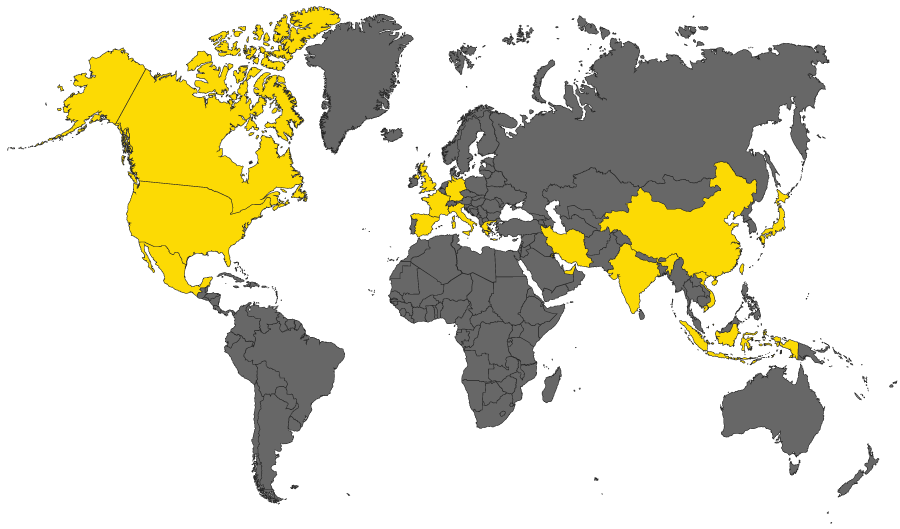
Serving clients across the globe.