Why Traditional SEO Alone Is No Longer Enough
Your rankings held. Your traffic fell anyway.
That gap is the clearest sign that traditional SEO is no longer enough for the way people search today. Google now answers a lot of questions right on the results page. Your page can sit at the top and still lose the visit.
This article walks through the three changes behind that shift. AI Overviews, zero click search, and the end of the ten blue links layout. Then it shows what to add to the SEO work you already pay for.

Why rankings and clicks stopped moving together
For two decades a higher position meant more visits. That link broke.
The Pew Research Center followed 900 US adults for a month and logged 68,879 Google searches. Around two thirds of them ended with the person either searching again or leaving without clicking a single result.
So a report showing steady keywords can be right at the same time your traffic chart drops. Both numbers describe the same page. They just measure different halves of it.
Which half did you lose? The answer usually starts with the box that now sits above your listing.
AI Overviews answer before your page gets a chance
An AI Overview, sometimes called an AI summary, is the answer Google writes at the very top of the results. It borrows pieces from several sites and blends them into one short reply.
In that same study, when an AI Overview showed up, people clicked a normal result 8% of the time. When it did not show up, they clicked 15% of the time.
Clicks on the sources listed inside the box were rarer still, about 1 in 100 visits.
It does more than take the click. Pew found that 26% of people closed their browser right after seeing one, against 16% when no AI summary appeared.
These answers keep spreading. Pew counted them on 18% of searches in March 2025. At its 2026 developer event, Google said AI Overviews now reach more than 2.5 billion people a month.
What sets one off matters more than the average:
- Searches of one or two words bring one up about 8% of the time.
- Searches of ten words or more bring one up about 53% of the time.
- Questions starting with who, what, or why bring one up about 60% of the time.
That last line describes almost every blog post you have ever written. Your service pages sit safer. Your guides and how to post are the ones that feel it.
| What this means in practice
The top of your funnel absorbs the loss first. Guides, definitions, and how articles feed the summary. Pricing, booking, and location pages still send people to you. |
The summary is only one of several ways a search now stays inside Google.
Zero click search shows traditional SEO is no longer enough
Zero click search is simple. Someone gets what they need and never leaves the results page. That used to be rare. Now it is normal.
The drop is not spread evenly, and that is good news for your budget.
Long, chatty questions, the kind that open a research session, pull an AI answer most of the time. Short searches that name a service, a brand, or a town mostly do not.
So people who want to learn tend to stay put. People who want to buy still click through.
This is where traditional SEO is no longer enough. A plan built to win learning keywords aims at visits that no longer arrive.
Want to know where you stand? Pull your top 50 landing pages, mark each query as learning or buying, then compare clicks per impression for the two groups. The gap tells you how much of your plan sits in the part Google now handles by itself.
The third change gets the least attention, because it crept up slowly.
Search is no longer ten blue links
Results in 2026 rarely open with ten plain listings near the top. You get an AI answer, a map pack, People Also Ask, video, forum threads, shopping tiles, and ads.
Google shared that AI Mode had passed one billion users a month. Its query volume more than doubles every quarter.
So a single search can end in many places now. Clicking a blue link is only one of them.
Local businesses feel this differently. Look up a service plus a town, and you still get a map, reviews, and opening hours, so the click survives. Look up what a condition means, or how two treatments compare, and the reply often arrives before any website does.
Ranking first in a layout that no longer leads with rankings buys you less than it used to. Showing up across formats buys you more.
What classic SEO still does, and what you add
Saying traditional SEO is no longer enough does not mean the basics stopped working. Pages Google can crawl, clear titles, useful writing, and real links still decide whether a machine can read you at all.
Google says the same thing in its own guide for site owners. There are no extra rules for showing up in AI Overviews or AI Mode, and no special tricks to learn.
What changed sits one level up. Those basics now put you in the running instead of handing you the result. Here is where the work shifts.

5 moves to make when traditional SEO is no longer enough
- Answer first, explain second. Put the direct answer inside the opening 50 words of every page, because summaries and snippets pull from clean, early answers.
- Build connected content, not one off posts. One deep pillar page with six related articles, all linked to each other, shows readers and search engines what you really cover.
- Cover the whole question, not one wording of it. Google runs a query fan out, sending several related searches across smaller topics before it writes a reply. Pages that also answer those side questions get picked up more often.
- Make your brand easy to check. Keep name, address, and phone consistent across listings, publish real author bios with credentials, and mark up services, staff, and FAQs with structured data.
- Change the scoreboard. Report impressions, branded searches, mentions in AI replies, and assisted conversions next to sessions.
The takeaway
Traditional SEO is no longer enough on its own, and nothing replaced it. It became the floor rather than the ceiling.
Brands that get found in 2026 are the ones a machine can read, verify, and quote with confidence.
At Graphicwise we build that layer on top of the SEO programs our clients already run. What you paid for keeps earning inside a results page that no longer looks like the one it was built for.
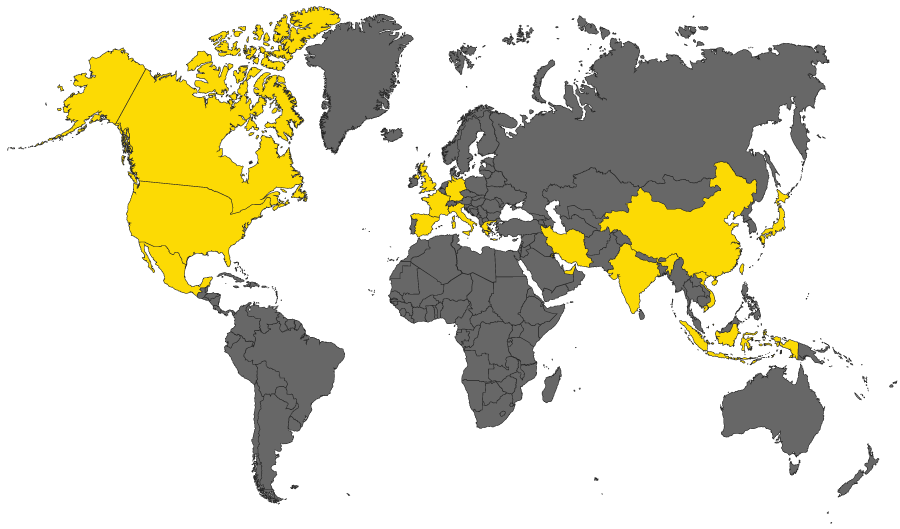
Serving clients across the globe.