How to Optimize Content for ChatGPT Search in 2026
People are no longer using Google alone to research businesses, compare services, or find answers. More searches now happen through AI tools like ChatGPT, where users can ask detailed questions and receive direct responses.
For your business, that creates a new visibility challenge.
Learning how to optimize content for ChatGPT Search in 2026 is not about finding another ranking trick. It is about making your website useful, trustworthy, and easier for AI search systems to understand.
At Graphicwise, we see this as an extension of a strong SEO and content strategy, not a replacement for one.

What does ChatGPT Search optimization mean?
ChatGPT Search optimization means making your content easier for AI search systems to find, understand, and potentially use as a source.
It builds on strong SEO fundamentals, but also considers how content may appear within AI generated answers. This growing shift toward Generative Engine Optimization (GEO) gives your business another opportunity to reach potential customers beyond traditional search results.
The goal remains simple: be visible when potential customers are looking for answers related to what you do.
Why ChatGPT Search matters for businesses
Search is becoming more conversational.
Instead of searching only for “best branding agency,” someone can ask ChatGPT what type of agency they need, what they should look for, or how different services compare.
That changes the role of website content.
Your articles are no longer competing only for clicks. They can also help AI search systems understand your expertise, services, and the topics your business should be associated with.
If your business already invests in SEO, you do not need to start over. Your content strategy simply needs to evolve with the way people search.
How to optimize content for ChatGPT Search
There is no guaranteed formula for appearing in ChatGPT Search. However, you can strengthen the qualities that make your content useful for both traditional and AI driven search.
1. Give clear answers
More content is not always better content.
If the main answer is buried under a long introduction or unnecessary explanation, readers have to work harder to find what they need.
Strong content gets to the point. If a page answers a specific question, make that answer easy to identify and use the rest of the content to provide useful context.
This does not mean every article needs to be short. It means every section should have a purpose.
2. Build authority around topics
One article can answer a useful question, but it does not show the full extent of your expertise. Over time, related content can help build a clearer picture of what your business knows and does.
For example, a branding agency might create content around brand strategy, visual identity, website design, and common branding challenges. These topics naturally support the services the agency already provides.
The same idea applies to AI search. Focus on topics that genuinely connect to your services and the questions your customers are asking, rather than creating content around every keyword that seems relevant.
3. Make your expertise clear
Your website should make it clear what your business does and where your expertise lies.
Services, areas of expertise, brand information, and supporting content should tell a consistent story.
The content itself matters too. Generic articles that repeat information found across hundreds of websites provide little reason to choose one source over another.
Original experience, professional insight, examples, case studies, and first party knowledge can make a business more distinctive.
4. Use credible information
Trust is important when information may be used to support an answer.
Statistics, research, technical claims, and other verifiable information should come from reliable sources whenever possible.
You can also strengthen your content with your own expertise. Original data, real examples, professional observations, and case studies can provide value that generic content cannot.
Good content should give readers a reason to trust the information, not simply ask them to.
5. Think beyond one article
Optimizing one blog post is only part of the picture.
Your articles, service pages, internal links, technical SEO, brand information, and overall website structure all contribute to how clearly your expertise is communicated.
That is why ChatGPT Search optimization should not become another isolated marketing tactic.
At Graphicwise, we look at AI search visibility alongside SEO, content, website strategy, and branding because these areas support one another.
SEO still matters in the age of AI Search
ChatGPT Search does not mean businesses need to abandon SEO and start over. It simply creates another way for customers to find information and discover brands.
SEO still provides the foundation for search visibility. Meanwhile, Answer Engine Optimization (AEO) and Generative Engine Optimization (GEO) extend that strategy to search experiences where users receive direct answers from AI.
The goal is not to choose between SEO and AI Search. Businesses need useful, trustworthy content that clearly demonstrates their expertise and gives them more opportunities to be discovered across both.
Common mistakes businesses should avoid
ChatGPT Search does not mean you need to abandon SEO and start over. It simply creates another way for potential customers to find information and discover your brand.
SEO still provides the foundation for search visibility. Meanwhile, Answer Engine Optimization (AEO) and Generative Engine Optimization (GEO) extend that strategy to search experiences where users receive direct answers from AI.
The goal is not to choose between SEO and AI Search. Your business needs useful, trustworthy content that clearly demonstrates your expertise and creates more opportunities to be discovered across both.
Search is changing. Your strategy should evolve with it
ChatGPT Search is changing how people discover businesses online, but that does not mean starting over. Strong SEO, useful content, clear expertise, and a trusted brand still matter. The difference is that your business now has more places to be discovered.
At Graphicwise, we help businesses strengthen that digital presence through SEO, content strategy, branding, and website development, with AI search visibility considered as part of the bigger picture.
Our team brings more than 20 years of experience in branding and digital marketing, helping businesses build strategies designed for long term visibility and growth.
Want to know how your business can prepare for the next phase of search? Contact us to talk with our team about your SEO, content, and digital strategy.
FAQs about ChatGPT Search optimization
Can businesses optimize content for ChatGPT Search?
Yes. Businesses can improve content quality, website structure, authority, and technical accessibility to make their information easier to discover and understand. However, there is no guaranteed formula for earning a citation or position in ChatGPT Search.
Does ChatGPT Search replace traditional SEO?
No. SEO remains an important foundation for online visibility. ChatGPT Search, AEO, and GEO expand how businesses need to think about where and how their information may appear.
Does schema help with ChatGPT Search?
Structured data can help machines understand information about a page, but schema should not be treated as a shortcut to AI visibility. It works best as part of a broader technical SEO strategy.
How can a business improve its chances of being cited by AI?
Clear answers, trustworthy information, original expertise, strong topical relevance, and an accessible website can make content more useful as a source. No individual optimization guarantees a citation.
How can businesses measure AI search visibility?
Businesses can monitor brand mentions, AI citations, referral traffic, and visibility for important questions related to their services.
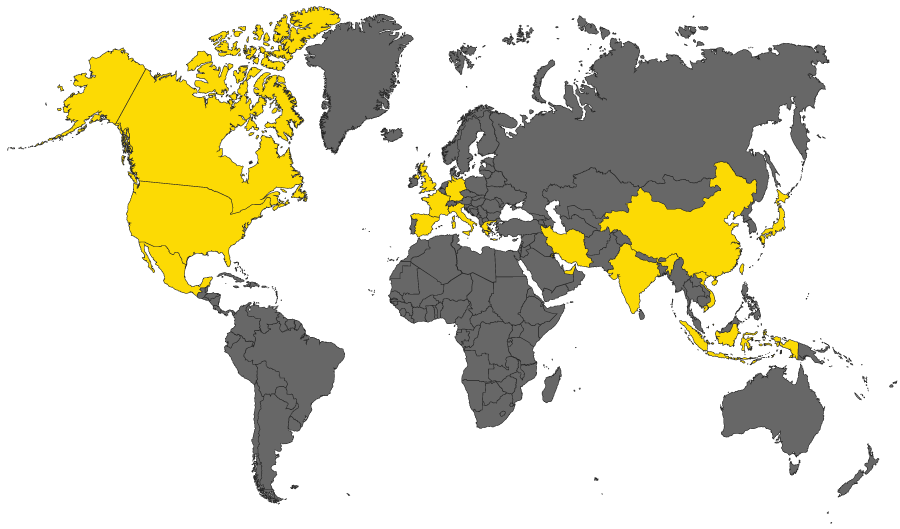
Serving clients across the globe.